
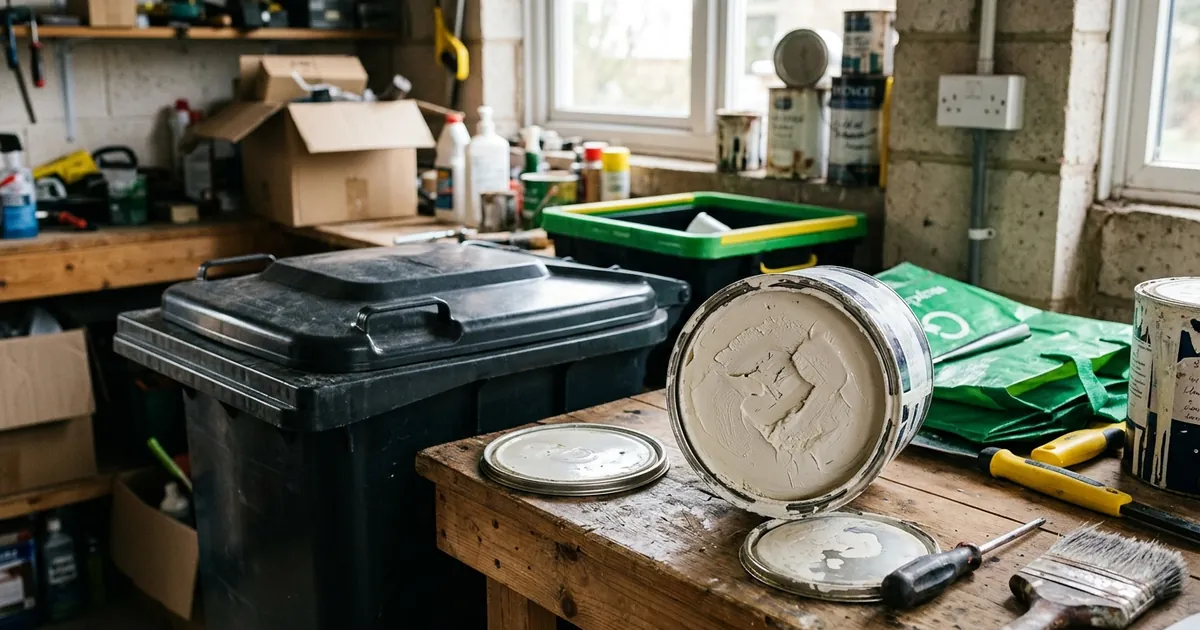
Half tins crowd the garage shelf: last year’s bedroom colour, a gloss that never matched, tester pots nobody chose. They sit there because nobody knows how to dispose of paint safely — it feels too useful to throw away, yet too risky to pour down a drain. Both instincts are right. Every tin needs a route, and each route starts with one question: is it still liquid?
Paint Disposal Starts With One Rule
Liquid paint never enters a bin, full stop. Even a general waste removal crew leaves paint behind, because licensed carriers cannot carry liquid paint at all. How to dispose of paint starts with that rule. Short on time? Harden water-based paint and bin it, send solvent paint to a recycling centre, and give paint away.
Water-based
Harden it, then bin it.
Solvent-based
Recycling centre hazardous point.
Still usable
Give it away to someone who will use it.
That breath covers how to dispose of paint — the sections below handle every tin.
Paint Disposal Options Compared
Four routes cover every tin you own. The one for you depends on the type, the amount left, and whether somebody can use it. How to dispose of paint is this choice, tin by tin.
| Route | Best for | Cost | Effort |
|---|---|---|---|
| Harden it, then bin it | Water-based paint, part-used tins | Free | Low — drying time only |
| Recycling centre (HWRC) | Solvent paint, large amounts, all tins | Usually free for residents | One trip |
| Community RePaint | Usable paint, half a tin or more | Free | Drop-off point |
| Council hazardous collection | Solvent paint you cannot transport | Free across most of London | Book ahead |
Book a Hazardous Paint Collection
The City of London runs a free collection for paint and chemicals in almost every borough, up to 50 litres a time. Hillingdon sits outside the scheme, so its residents book through the borough.
Paint Disposal UK: Store Take-Back Is Coming
Paint disposal UK-wide may soon add a shop counter. PaintCare, the industry scheme led by the British Coatings Federation, now pilots store take-back with B&Q and Dulux Decorator Centres, with national rollout planned for 2027.
Can You Put Paint in the Bin?
Only solid paint belongs in the bin. Crews refuse liquid paint on sight, and landfill sites ban liquid waste outright, because one split tin contaminates a whole load during collection.
The Paint Screwdriver Test
So the real question behind can you put paint in the bin is simple: has the paint set, right through? If a screwdriver sinks or the tin sloshes, it goes back to hardening.
Skips Follow the Same Paint Rule
Skips follow the same rule, in fact. A dry, empty tin can go in with the operator’s permission, while a wet tin comes straight back out and usually brings a charge with it.
Why Councils Cannot Collect Liquid Paint
How to dispose of paint never runs through the weekly collection, because UK law bans liquid waste from landfill. The Environment Agency enforces that ban through permits, so crews leave wet tins behind.
Paint in Flats and Shared Bins
Flat life changes nothing, although shared bins tempt people daily. Tins beside a communal bin count as dumping, so flat-dwellers use the same routes: harden it, book a collection, or visit a centre.
Dumped Paint Tins Count as Fly-Tipping
Tins left beside a street bin or in a layby take a worse route instead. That shortcut has a name, fly-tipping, and in England it carries a fixed penalty up to £1,000, before clean-up costs.
How to Dispose of Old Paint at Home, Step by Step
How to dispose of old paint at home follows one sequence of four steps. First, check the type, then harden it, prove it solid, and finally choose the bin or the recycling centre.
Step 1 — Check the Paint Type
Start with the clean-up line on the label, because that line decides the whole route. Brushes that rinse in water mean emulsion, while brushes that need white spirit mean solvent-based paint.
The Paint Types on Your Shelf
Shelves hold the same families: emulsion for walls, gloss, satin and eggshell for wood and metal, primer and undercoat beneath them, masonry paint outside, and varnish or wood stain. Chalk paint follows its water base.
Step 2 — Harden Water-Based Paint
Small amounts dry alone with the lid off, and brush-outs on scrap cardboard dry even faster. Fuller tins need sand, sawdust, cat litter or hardener stirred in until the paint sets solid.
Paint Drying Times: What to Expect
A thin layer skins over in a day or two, while a half tin sets in three to five days. A full tin takes a week, so plan how to dispose of paint early.
1–2 days
A thin layer skins over.
3–5 days
A half tin sets.
About a week
A full tin.
Step 3 — Prove the Paint Is Solid
Next, push a screwdriver through the surface before you bin any tin. Paint skins over while liquid hides underneath, so a tin that sloshes goes straight back to Step 2.
Step 4 — Bin Paint or Book the Recycling Centre
Solid emulsion goes in the waste bin in most council areas, while solvent paint travels to the recycling centre hazardous point instead. That is how to dispose of paint at home: one bin, one trip.
Clean Paint Brushes Without Polluting the Drain
Wipe brushes on newspaper first, then wash water-based paint in a bucket, never under a running tap. Let the solids settle overnight, strain the sludge into cat litter, harden it, and bin it.
How to Dispose of Paint Tins
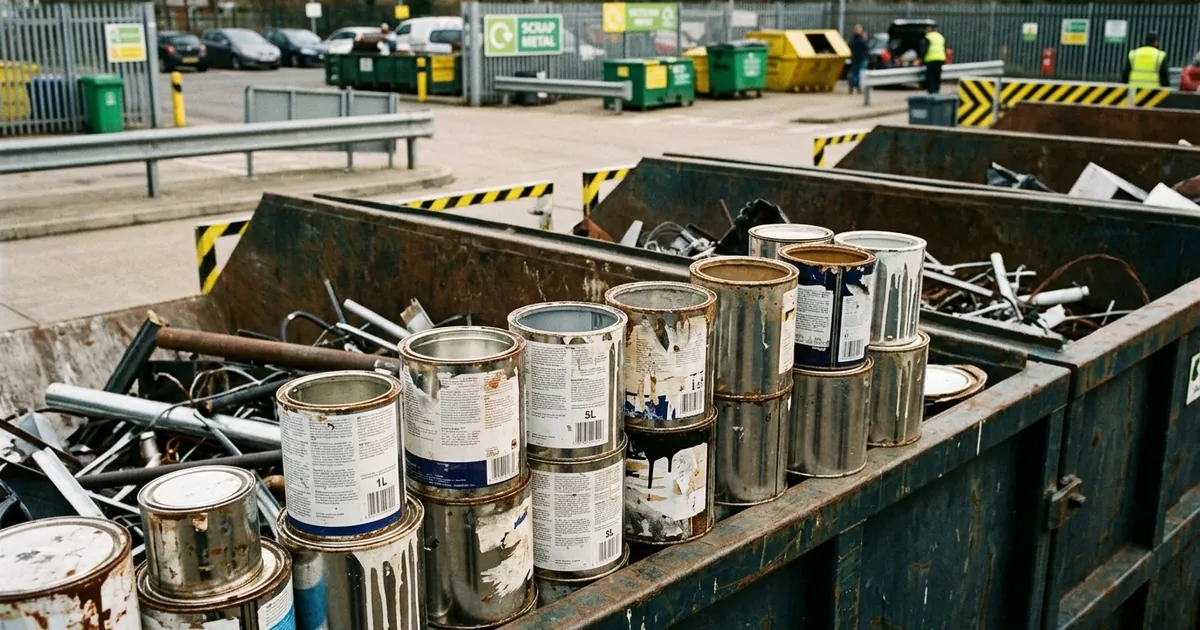
Once you deal with the paint, the tin follows its material. That is how to dispose of paint tins: a dry metal tin counts as scrap metal, so centre staff point you at the bay.
Plastic Paint Tubs Vary by Council
Plastic tubs vary far more, however. Some councils accept them in household recycling, many refuse them outright, and the recycling mark on the base gives your first clue before the council page settles it.
Paint Tin Lids Off, Labels On
Dry the tin, then store it with lid off and label on, so staff see an empty tin at a glance. A tin with wet paint inside never counts as empty, so harden the residue.
What Happens to Paint at the Recycling Centre
Staff direct liquid paint to a locked hazardous store and dry metal tins to the scrap bay. Many sites run a Community RePaint drop point, so tell staff what you carry before you unload anything.
Solvent-Based Paint: Different Rules
Gloss is where the rules harden. Oil-based paint, varnish, thinners and white spirit stay hazardous, because drying changes the texture, never the chemistry. How to dispose of paint safely starts with respecting that difference.
Solvent Paint: One Destination Only
How to dispose of paint with solvents has one answer: the recycling centre hazardous point. Store it in its labelled tin, lid tight, and never pour it down drains or hide it in a skip.
White Spirit, Thinners and Brush Cleaner
White spirit, paint thinners and brush cleaner follow the gloss route exactly: original container, lid tight, hazardous point or booked collection. Never pour brush washings down the sink, because solvents reach watercourses fast.
Carry Paint Tins Safely
Wear gloves, open a window, and carry the tins upright in the car so nothing tips. Once the load passes about five litres, though, a booked hazardous collection usually replaces the trip.
Old Paint May Contain Lead
Paint from before the 1990s can contain lead, because makers phased it out of paint around then. Treat how to dispose of paint from homes as hazardous by default, and never dry-sand old paintwork unprotected.
Spray Paint and Aerosols
Spray cans run on pressurised gas, so they form their own problem. An empty can recycles with household metal in many areas, while a part-full can stays hazardous and never gets punctured, burned or crushed.
Give Usable Paint Away Before You Throw It Away
First, check whether the paint deserves the bin. Stir it: smooth paint that smells like paint, not sour milk, still works. Passing it on is the oldest answer to how to dispose of paint.
Signs the Paint Has Gone Off
Good paint stirs back to one smooth colour, while spoiled paint smells sour, carries lumps that never break down, or shows rust flakes from the lid. Frozen emulsion separates for good and never covers again.
Community RePaint Runs It at Scale
Community RePaint runs that idea at scale. Its 75-plus schemes, sponsored by Dulux, gather leftover paint through recycling centres and community groups, then sell it cheaply to local projects, schools and families.
ReColour: Remanufactured Paint
Some schemes go further and remanufacture donations into ReColour paint. Technicians filter, treat and blend tins into interior, exterior and chalk paints. It is how to dispose of paint by turning it back into paint.
Give Paint Away Closer to Home
Neighbours, allotment groups and school art departments also take part tins gladly. In most streets, a photo in the residents’ WhatsApp group finds a taker by lunch, especially before a bank-holiday decorating weekend.
55 Million Litres of Paint Deserve Better
The British Coatings Federation estimates 55 million litres of paint go to waste in the UK every year, and the average home stores around six part-used tins. Only 2% gets reused, so your shelf matters.
Storing Paint You Keep
Keeping a part tin for touch-ups takes one minute of care. Press cling film onto the surface, tap the lid down tight, and store the tin upside down so the seal stays airtight.
Label Paint Tins for Future You
Then write the colour and the room on the lid before you shelve it. Future you, facing four identical white tins, will feel grateful, and a frost-free spot away from kids keeps it alive.
Keep Paint Tins Frost-Free
Garages freeze in a London winter, and frost quietly ruins emulsion while gloss survives the same night. A cupboard indoors, a loft, or even a hallway shelf keeps water-based tins alive until the next touch-up.
Paint From a Job: Trade Rules Differ
Paint left over from a paid job counts as business waste, not household waste. Household recycling centres turn trade tins away, because the duty of care sits with the business that produced them.
Paperwork Follows Trade Paint
For trade, how to dispose of paint means licensed carriers, paperwork and waste transfer notes at every handover. The type rules stay the same, while the routes and the records follow business law instead.
Leave the Client a Touch-Up Paint Tin
Many decorators leave one labelled touch-up tin with the client and consolidate the rest for the carrier run. The client gains a colour match for scuffs, and the van carries fewer part tins between jobs.
Why Waste Crews Refuse Liquid Paint
Licensed carriers work from a prohibited list, and liquid paint sits on it, so removal crews refuse your paint. It is the one material where how to dispose of paint offers no paid shortcut.
One Paint Rule for Every Licensed Crew
Flash Waste Removal follows the same rule as every licensed operator on that list. The paint stays behind, whatever else leaves on the truck that day.
The Rest of the Clear-Out Travels Without the Paint
The rest of a renovation clear-out travels in one visit through builders waste removal while the tins take their own routes. Splitting the load is how to dispose of paint mid-clear-out.
Paint and the Environment
Solvents, pigments and preservatives poison aquatic life in small amounts, and that harm explains the landfill ban and the hazardous stores. How to dispose of paint is an environmental choice, not just a legal one.
One Paint Tin in a Drain Does Real Damage
A single tin poured away can foul drains, kill pond life and force clean-ups at treatment works. Hardening costs one bag of cat litter instead, so the cheap route and the clean route match.
Paint Mistakes That Lead to Fines
Almost every paint fine starts as a shortcut, because most people guess how to dispose of paint instead of checking. Four mistakes cause nearly all of them:
- Down the drain. The fastest route to a polluted watercourse, and treated as seriously as dumping.
- In the skip, it was still wet. The firm rejects the load or bills you for hazardous handling.
- Beside the street bin. Abandoned tins count as fly-tipping — up to £1,000 in England.
- Gloss in the household bin. Solvent paint in a general load breaks the duty of care.
The Paint Fine Can Reach the Householder
The legal line matters more than most people realise, in fact. A fine can land on the householder, not the dumper — the duty of care starts at your front door.
Final Word on Paint Disposal
How to dispose of paint gets simple once the tins sit sorted. Sort by type: harden the water-based tins for the bin, book the solvent tins a hazardous route, and pass the good paint to somebody who will use it. The shelf then clears legally, drains stay clean, and no tin risks a fine. Liquid is the problem, solid is rubbish, and usable paint is a gift — that rule never changes.
Decorating done, clear-out waiting?
The paint takes its own route — the rest of the job leaves in one visit. Send a photo on WhatsApp and we quote the figure before we set out.
- Load pricing from around £99
- Collected from any room, any floor
- Licence CBDU563052
- Waste transfer note on every job